
👻 Ghost Fish and the Ocean’s Creepiest Creatures: Nature’s Deep Sea Nightmares
The ocean covers more than 70% of Earth’s surface, yet its deepest parts remain largely unexplored. In the inky blackness of the deep sea, evolution has taken a terrifying turn. From ghost fish that appear almost invisible, to faceless creatures and monsters with transparent skin, the ocean is home to some of the creepiest animals known to science. These creatures, while eerie, offer insights into survival in the planet’s most extreme environments.
In this article, we’ll dive into the shadowy world of ghost fish and other horrifying deep-sea species that seem pulled straight from a sci-fi thriller.
👁️ What Are Ghost Fish?
Ghost fish is a nickname often given to extremely pale, semi-transparent, or deep-sea species that appear “phantom-like.” Many of them live in the abyssal zone, over 3,000 meters below sea level, where sunlight never reaches. Their bodies have evolved in strange ways to survive the crushing pressure, frigid temperatures, and complete darkness.
One of the most famous ghost fish is the Macrouridae species, also known as the rattail fish. In 2016, Australian researchers using a robotic submersible discovered a ghost-like fish with no visible eyes and translucent skin near Australia’s eastern abyss.
Another chilling example is the Tadpole Snailfish, discovered in the Mariana Trench. Its gelatinous body allows it to resist pressures that would crush most organisms.
🧠 Why Are Deep Sea Creatures So Creepy?
The ocean’s darkest regions are hostile places. Creatures that thrive there must be:
-
Efficient hunters or scavengers
-
Able to withstand massive pressure
-
Adapted to complete darkness
These conditions have created species with:
-
Giant teeth and unhinged jaws (like the gulper eel)
-
Bioluminescence to lure prey (like the anglerfish)
-
Translucent or skinless faces (like the faceless cusk eel)
Creepy as they may look, these adaptations help them survive where few others can.
👻 Top 5 Creepiest Sea Creatures Ever Found
1. Faceless Cusk Eel
-
Depth: 4,000–6,000 meters
-
Location: Discovered during Australia’s deep sea expedition
-
Creep Factor: It has no visible eyes or mouth on its face. Its skin is smooth and slimy, like something from a ghost story.
-
Fun Fact: It can sense prey using vibrations and smells.
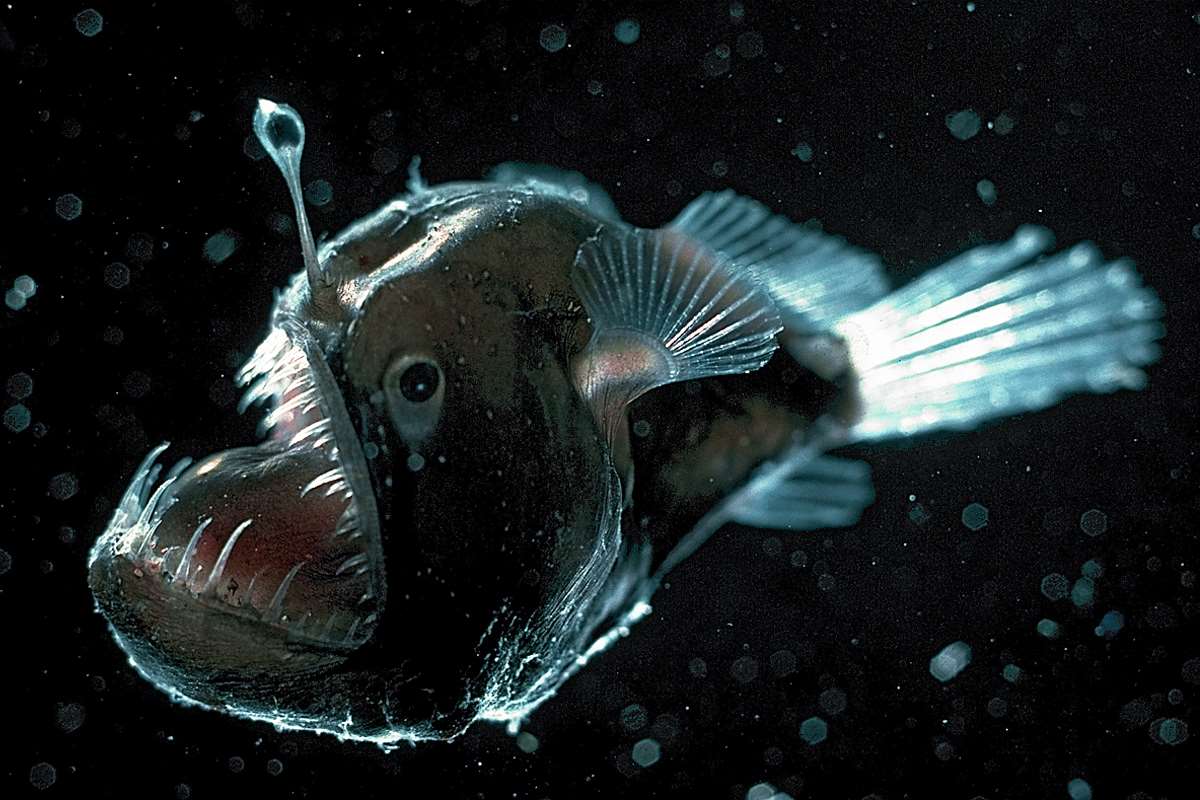
2. Anglerfish
-
Depth: 2,000–3,000 meters
-
Location: Atlantic and Antarctic oceans
-
Creep Factor: This toothy monster uses a glowing lure that dangles from its head to attract prey. Females often absorb their tiny male mates into their bodies.
-
Fun Fact: The glow comes from bioluminescent bacteria.
3. Vampire Squid
-
Depth: 600–900 meters
-
Location: Tropical deep-sea oceans
-
Creep Factor: Despite its name, it doesn’t suck blood. But it looks terrifying, with a cape-like web connecting its arms and red eyes.
-
Fun Fact: It ejects a cloud of glowing mucus to escape predators.
4. Goblin Shark
-
Depth: 100–1,200 meters
-
Location: Pacific, Atlantic, and Indian Oceans
-
Creep Factor: This rare shark has a protrusible jaw that snaps forward like a slingshot. Its skin is pale pink, making it look like a walking corpse.
-
Fun Fact: It’s often called a “living fossil” due to its ancient lineage.
5. Barreleye Fish
-
Depth: 600–800 meters
-
Location: North Pacific Ocean
-
Creep Factor: It has a transparent head where you can see its tubular eyes floating inside its skull.
-
Fun Fact: Its eyes rotate inside the dome to track prey above or in front.
🧬 The Science Behind Their Evolution
What makes these creatures look so alien? It all comes down to extreme adaptation:
-
Pressure resistance: At depths of 4,000+ meters, pressure exceeds 5800 PSI. Bones and muscles must adapt or dissolve.
-
Low energy diets: Many of these animals move slowly and consume anything they find—including marine snow or dead organisms.
-
Camouflage: Translucent bodies and light-absorbing skin help them stay hidden from predators.
🧠 Are Ghost Fish Dangerous?
Not to humans. Most ghost fish and deep-sea creatures live at depths no diver can reach. They pose zero threat to beachgoers or casual swimmers. However, their fragile ecosystems are threatened by deep-sea mining, trawling, and climate change.
🐚 Why We Need to Study These Creatures
Though they may seem monstrous, deep-sea creatures like ghost fish are:
-
Biological marvels
-
Indicators of ocean health
-
Key to understanding life under extreme conditions
Some have even inspired biomedical innovations, such as pressure-resistant proteins and materials for deep-sea exploration vehicles.



0 Comments